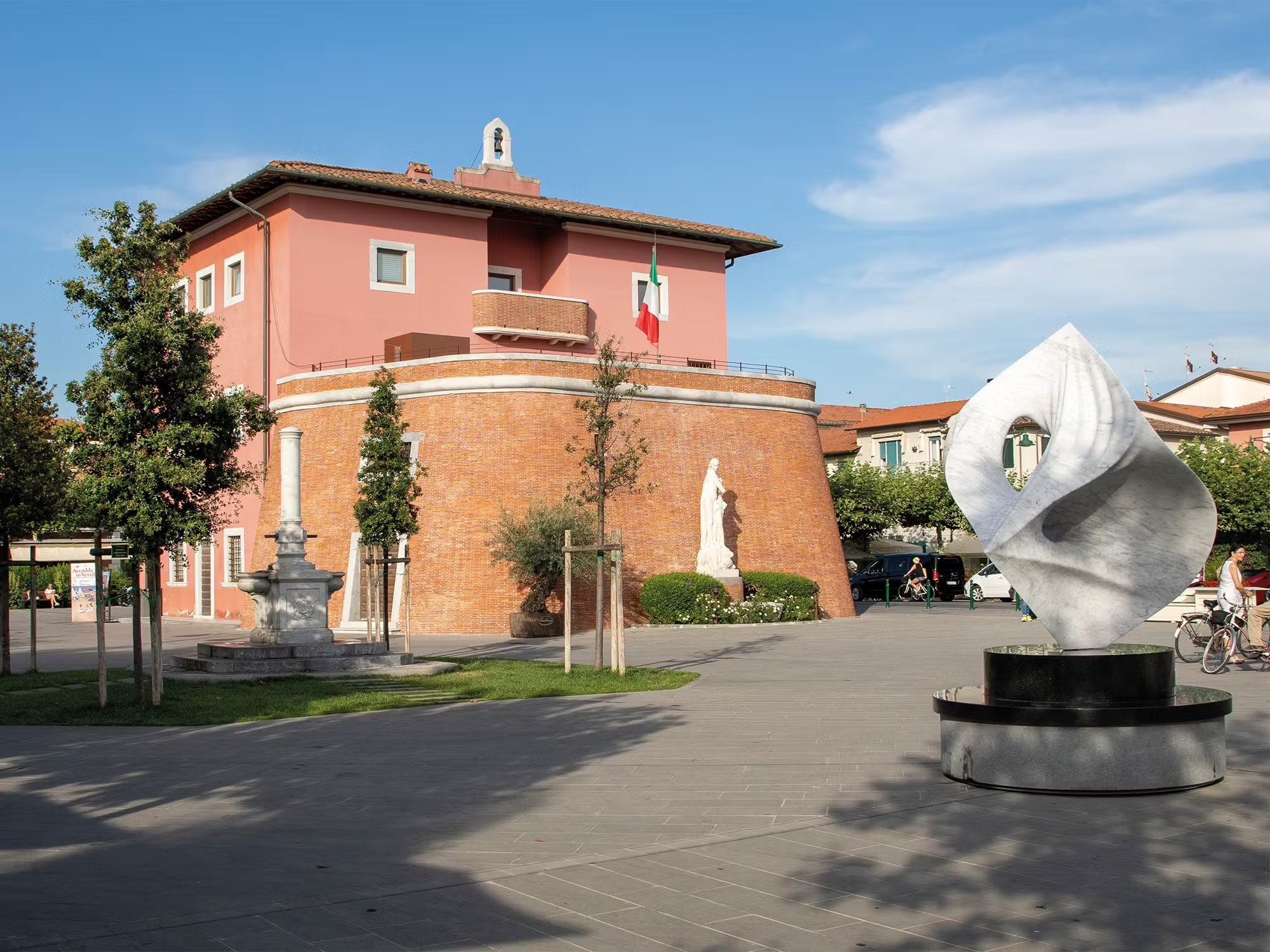
Forte dei Marmi — between the identity of the place and the potential of marble as a design material
Some places stay still, yet keep returning.
Forte dei Marmi is one of them. A place deeply tied to my personal memories — endless summers, familiar landscapes, quiet gestures — which I now revisit with different eyes. More attentive, more design-driven.
This time, my focus turned to the deep relationship between the land and marble. Not just a symbol of elegance or aesthetic heritage, marble here is a material that defines the identity of this part of Tuscany.
The Apuan Alps rising above the coastline speak of centuries of extraction, craftsmanship, and transformation. But today, marble also opens up new questions: how can we use it more sustainably, more consciously, more meaningfully — bridging artisanal traditions with contemporary innovation?
The Material History of Marble and Its Connection to Forte dei Marmi
Forte dei Marmi began as a coastal outpost to support the transport of marble from the nearby Apuan quarries. As early as the 15th century, the area developed as a key transit point: roads linked the mountains to the sea, the long pier was built for loading blocks onto ships, and warehouses lined the shore for storing this heavy, precious material. With the construction of the Fortino in 1788, the town’s identity as a marble hub was solidified — both defensively and culturally. These origins have left tangible marks on the urban fabric, turning raw material into a foundational element of the local landscape and narrative.
Contemporary Challenges in Marble Processing and Use
Today, marble stands at a crossroads. Extraction practices — often aggressive and unsustainable — raise urgent environmental and ethical questions. How do we honor the material’s historic and cultural value while embracing responsible use? The industry is slowly shifting: advances in technology are helping reduce waste, lower energy consumption, and encourage creative reuse. Contemporary design plays a crucial role — working at a smaller scale, reimagining offcuts, and merging craftsmanship with innovation to reinterpret marble in new, more sustainable ways.
Contemporary Projects That Rethink Marble
Within this framework, several design projects are carving out new directions for marble. Some studios focus on small-scale objects that highlight the stone’s natural veining while minimizing waste. Others use the material architecturally, staging a dialogue between raw texture and pure geometry, tradition and CNC precision.
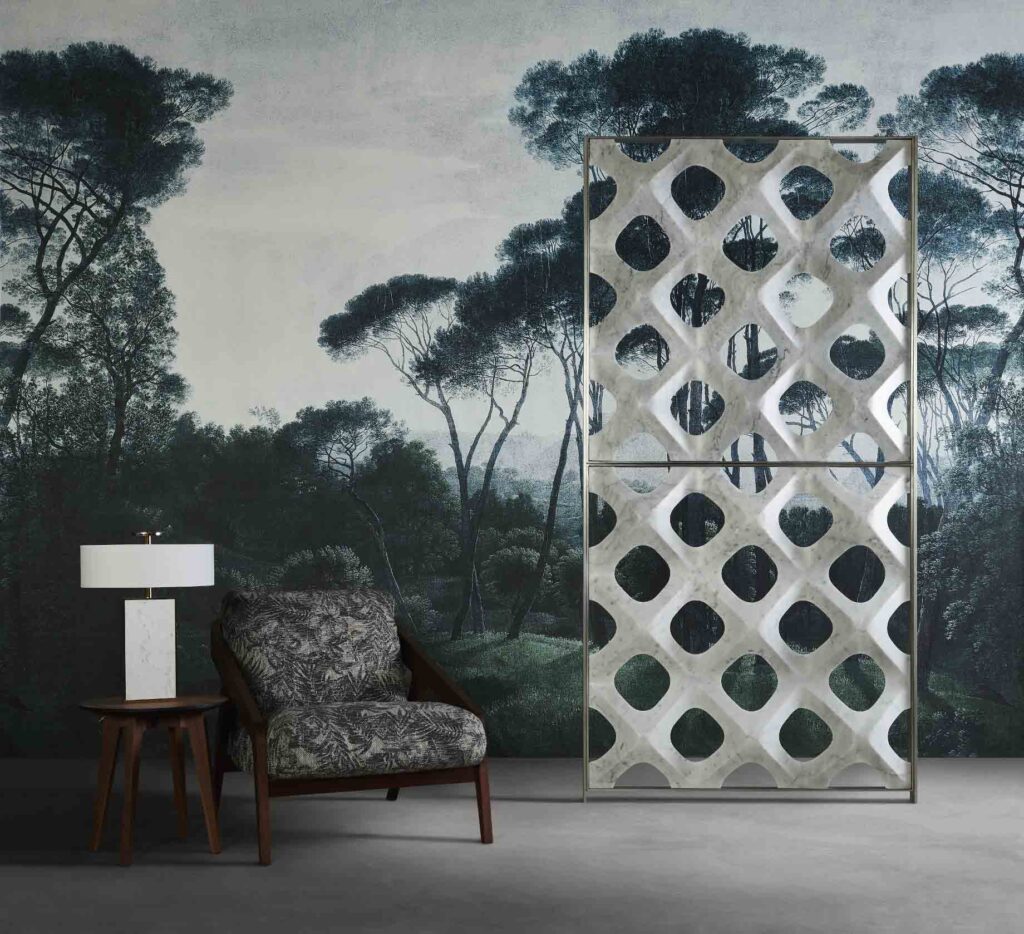
LITHOS – RETINA marble partition wall
In the interior design world, the exploration continues: marble blends with other materials to form hybrid, narrative surfaces. Lithos Design, for instance, promotes a sustainable vision of luxury, creating marble wall coverings that combine beauty and environmental responsibility. Stonethica goes even further, producing marble slabs made from up to 99% recycled material — elegant, durable, and circular.
Marble is not only part of the physical landscape — it’s embedded in the design mindset. A living, evolving material that tells a new story every time it’s cut, carved, or laid into place.
Comments (0)